
This piece is cross-posted from my Medium account. Check it out for more posts like these.
“Google is not a conventional company. We do not intend to become one.” The famous line from Larry Page and Sergey Brin’s Founder’s IPO letter has been a core part of Google’s identity since its IPO twenty years ago.
But the spirit of this line now seems vulnerable. Google’s moonshot projects, cushy employee compensation, focus on the customer, and relentless spirit of innovation have all been threatened in recent years. There is a growing sense that Google is no longer the plucky innovative startup it once was, but instead a sluggish corporate bureaucracy.
1: The beginnings
To understand Google’s present state, we must first understand its past.
Founded by Larry Page and Sergey Brin in 1998, Google had a strong and singular purpose: ‘to organise the world’s information and make it universally accessible and useful.’
And they honoured this purpose in a uniquely Googley way, with a distinctively playful yet fiercely intellectual environment. Employees were encouraged to think outside the box and pursue ambitious projects.
This unconventional spirit was reflected in its offices: Google’s original office, Susan Wojcicki’s (yes, that Susan’s) garage, has been noted for its ping pong table, bright blue carpet, and an initial server made of Lego. Its current headquarters (the Googleplex), resembles a playground rather than a typical office space, with amenities like nap pods, gourmet cafeterias, and even a company dog.
This unique atmosphere fostered creativity and collaboration, cultivating a sense of camaraderie among employees. Moreover, Google’s commitment to its workforce extended beyond mere perks; the company offered generous benefits, including comprehensive healthcare coverage, parental leave, and on-site wellness programs, ensuring employees felt valued and supported.
However, what truly set Google apart was its unwavering focus on the customer and its relentless pursuit of innovation. From its inception, Google prioritised user experience above all else, aiming to provide the most relevant and useful information possible. This customer-centric approach fueled the development of groundbreaking products like Google Search, Gmail, and Google Maps, revolutionising the way people access and interact with information online.
“Focus on the user and all else will follow.”
The first of Google’s “Ten things we know to be true”
Furthermore, Google’s spirit of innovation was ingrained in its DNA, with initiatives like “20% time,” where employees were encouraged to dedicate a portion of their workweek to pursuing passion projects, often resulting in the birth of new features and products. Even in the mid-late 2010s, Google’s focus on its ‘moonshot’ projects was relentless. Google restructured to form Alphabet in 2015, forming a subsidiary (labelled X, of all things…) as a “moonshot factory”. Its goal was to cultivate side projects that would one day become Google’s next big thing after search. And Google has been spending relentlessly: from 2021 to 2023, it raked in >$4 billion in operating losses each year. It’s spent this boatload of cash on numerous projects, such as Google Fiber (internet connectivity), Waymo (driverless cars), Nest (smart home tech), robotics, and various AI technologies.
This culture of experimentation and risk-taking propelled Google to the forefront of the tech industry, solidifying its reputation as a trailblazer in innovation and setting a precedent for corporate culture worldwide.
2: Recent Failures

However, Google has strayed from its core values in recent years.
Most visibly, it’s become both overreliant and complacent regarding its Search business. Let’s start with over-reliant. In 2023, 57% of Google’s revenue still came from its search business. When factoring in other advertising revenue, the figure rises to a whopping 77%.
Google’s search and ads business has little room to grow further. Its market share of the search industry has hovered around 90% for more than 5 years. And with AI-related improvements from competitors like Bing, Google’s market share is more likely to sink than rise (though check this article which explains why I don’t think Google’s market share will sink much at all—for now, at least.) As such, even though Google has been investing heavily in other sectors, it’s still extremely reliant on search.
Moreover, Google’s position regarding search has reflected a sense of deep complacency. Take early 2023’s AI debacle for instance. As ChatGPT captured the world’s attention, Google was very publicly caught blindsided by the ChatGPT-enhanced Bing. In response, it prematurely launched Bard —its own AI tool that proceeded to provide inaccurate information in one of its first promotional videos. Moreover, when Samsung was reevaluating if it wanted to renew its $3-billion-a-year contract to set Google Search as its devices’ default search engine, Googlers reportedly “reacted with emojis and surprise”, with one employee saying “wow, okay, that’s wild”. Hardly the stuff of a spirited startup fixated on innovation and disruption.
But Google’s failures extend past search. It’s faced excessive—at times, seemingly opposing—complaints from two groups: investors and employees.
Investors
In late 2022, activist investor TCI Fund Management launched a campaign against Google. In a 4 page letter, it detailed how Google had become an ineffective and sprawling giant. It lamented how Google’s headcount was too high, agreeing with Altimeter Capital’s Brad Gerstner that “It is a poorly kept secret in Silicon Valley that companies ranging from Google to Meta to Twitter to Uber could achieve similar levels of revenue with far fewer people.”
And this concern seems legitimate. Google’s employee count has exploded in recent years, doubling from 2018 to 2022 alone.

But isn’t this justified by Google’s increase in revenue as well? No—Google’s revenue-per-employee has decreased since its 2021 peaks, falling from $1.84m in 2021 to $1.49m in 2022. Google’s revenue-per-employee figure is also dwarfed by its big tech peers, such as Apple ($2.47m) and Netflix ($2.40m) in 2022.
Moreover, the letter also bemoans Google’s high compensation. It remarks how Google’s median salary was $295.9k in 2021, 67% higher than Microsoft’s and 153% higher than the median of the US’ 20 largest listed tech companies.
Beyond that, the letter criticises Google’s moonshot projects, labelled under its ‘Other Bets’ section. It advocated that Alphabet should cut operating losses from Other Bets in 2023 by 50%. Notably, it had this to say about Alphabet’s self-driving efforts:
The biggest component of Other Bets is Waymo. Unfortunately, enthusiasm for self-driving cars has collapsed and competitors have exited the market. Ford and Volkswagen recently decided to shut down their self-driving car venture, saying: “We have looked at this every way you can and we just see the profitability a long way out.” Waymo has not justified its excessive investment and its losses should be reduced dramatically.
And these claims aren’t without merit. It’s noted in the letter that from 2017 to 2022, Other Bets had generated only $3b in revenues from 2017 to 2022 while incurring a massive $20b in operating losses. Needless to say, Google’s next big thing hasn’t materialised yet. It’s shuttered many moonshot projects, such as smart contact lenses and balloons providing internet access. Also, as noted above, 77% of Google’s revenue in 2023 came from ads. In contrast, other bets contributed a puny 0.5% of the total sum. The remainder of Google’s revenue came from subscriptions, platforms, devices, and cloud — techy, for sure, but by no means the cutting-edge innovation Google supposedly strives for.
In response, Google has agreed to these activist-demanded cost-cutting measures: it implemented mass layoffs affecting 12,000 in January 2023 alone, incurring $2.1 billion in severance and related costs throughout 2023. It also managed to cut operating losses from Other Bets to $4.1 billion from $4.6 billion (not the 50% figure envisioned by TCI, but still notable nonetheless).
Employees
Separately, employees have raised concerns of their own too. In recent years, employees have begun increasingly complaining about Google’s mismanagement, with many resigning in protest. I’ve compiled a few links below detailing some very public and insightful posts by some former employees about their dissatisfaction with Google today.
- Steve Yegge (ex-senior engineer): Why I left Google to join Grab (2018)
- Noam Bardin (ex-Waze CEO): Why Did I Leave Google Or, Why Did I Stay So Long? (2021)
- Ian Hickson (ex-Flutter engineer): Reflecting on 18 years at Google (2023)
- Praveen Seshadri (ex-AppSheet CEO): The maze is in the mouse (2023)
- Diane Hirsh Theriault’s (current Google employee!) Linkedin Post (2024)
Generally, they follow a similar theme. Employees detail a tale of two Googles – old Google and new Google. Old Google was young, risk-loving, innovative, transparent, long-term oriented, and customer-focused. New Google is old, risk-averse, slow to change, bureaucratic, short-term oriented, and competitor-focused.
They bemoan how Google’s bloated corporate management structure has resulted in a lumbering bureaucracy, where every minor decision requires numerous levels of corporate approval to assess the risks related it entails. This is a far cry from early Google, where Larry Page once decided to fire all project managers in a single day in 2001 because he deemed them an unnecessary layer of supervision. (I’m not defending Page’s actions here, I’m just illustrating how bureaucratic Google has reportedly become). In early Google, risks were not only welcomed but also encouraged, as a sign of innovation and ambition.
More than anything, the employee complaints point to Google’s lack of direction—and more recently, layoffs and bureaucracies that reflect an inherently flawed and ineffective workplace structure. Take Diane Hirsh Theriault’s scathing critique for example:
My hot take: Google does not have one single visionary leader. Not a one. From the C-suite to the SVPs to the VPs, they are all profoundly boring and glassy-eyed…
Right now, all of these boring, glassy-eyed leaders are trying to point in a vague direction (AI) while at the same time killing their golden goose. Given that they have no real vision of their own, they really need their subordinates to come up with cool stuff for them. And at the same time, there have been rolling layoffs for the past 6-12 months throughout the company, including engineering, sales, support, UX, product, data science, SRE, everything. Just randomly firing people, torching institutional knowledge, and blowing up perfectly functional teams.
Maybe it’s not random. But they refuse to describe their reasons except as “we are excited to focus our resources on our highest priorities,” so it might as well be random. I think they don’t know what the priorities are. Not durably. They are waiting for their subordinates to propose concrete stuff in the direction they are waving their arms. Meanwhile, all of the mid-level leaders are scrambling to protect their teams (and themselves) by guessing what their VPs might find appealing. If you are a leader and you guess wrong, you and your team get cut.
And there’s a core incentive flaw at the heart of Google, where it’s not the customer that matters most – but protecting one’s own job. According to Praveen Seshadri:
Overall, it is a soft peacetime culture where nothing is worth fighting for. The people who are inclined to fight on behalf of customers or new ideas or creativity soon learn the downside of doing so. By definition, there is a disincentive to go above and beyond, and your peers and managers will look askance if you try to. You are expected to perform to the definitions of your level in your career ladder, as defined in a very rigidly defined ladder system. A L5 software engineer is expected to do certain things and will be evaluated to that rubric. The word “customer” is not part of that rubric, so don’t you bother supporting customers and don’t expect to be appreciated if you do. Don’t bother being innovative or doing something that wasn’t in the official plan set six months ago, because even if you did, your managers will not line up the associated dev, PM, Pgm, UX, docs, legal, and marketing resources to make it launchable anyway. However, your code better be well-formatted (the dev ladder expects that!) and make sure you have a lot of checkins (exactly what they do doesn’t really matter to anyone). Just wait two years, you’ll be promoted, and you can move onto a different team within Google. It’s just like Noam Bardin from Waze said — although every individual is well intentioned, the system has its own dynamic. And in this system, nothing is worth fighting for.
3: Two stakeholders: contradictory concerns?
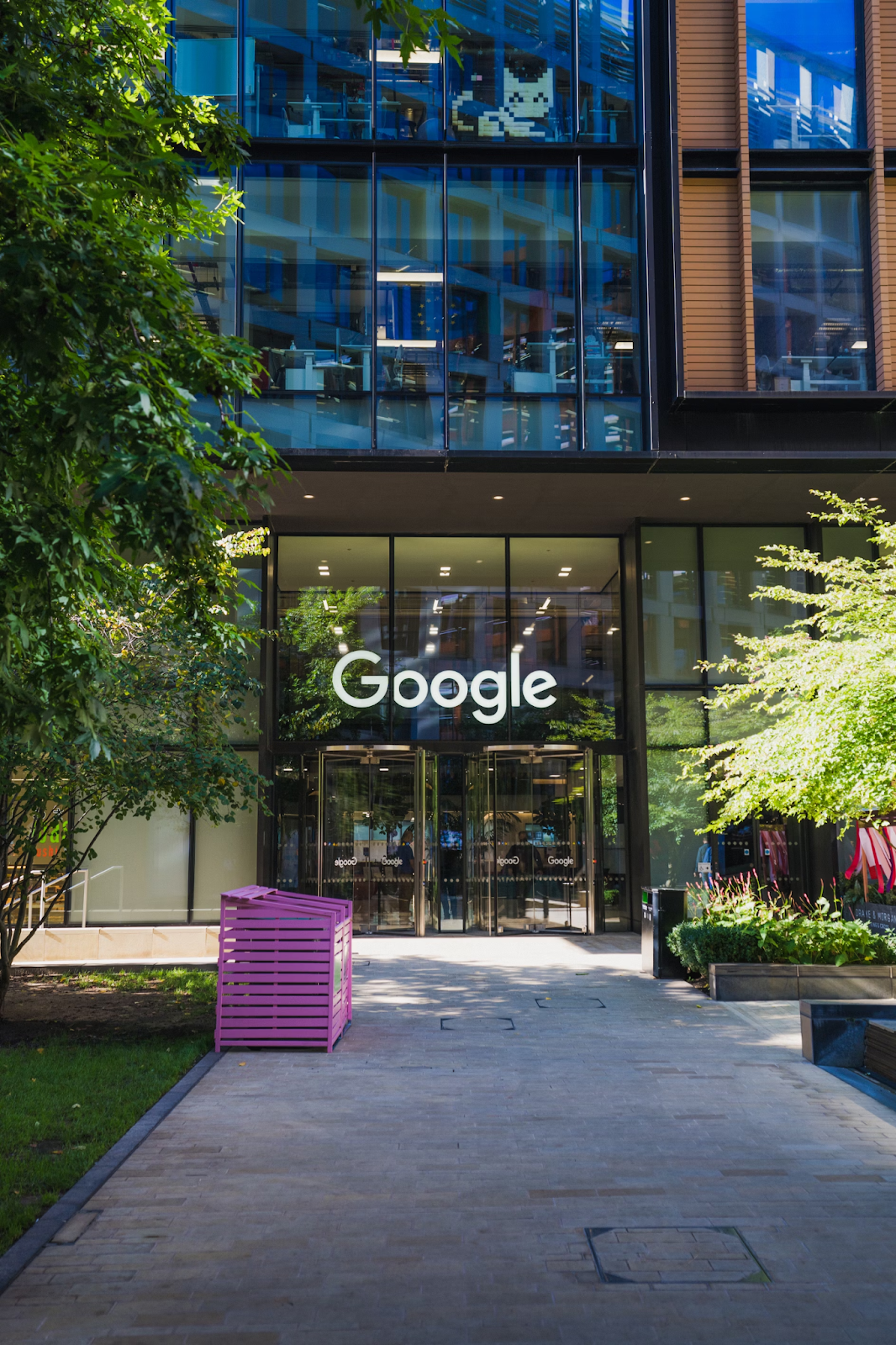
At first, it’s easy to paint these complaints as opposing. On one hand, shareholders are advocating for aggressive cost-cutting measures, with less generous employee compensation and benefits, while also cutting back on longer-term moonshots which haven’t borne significant fruit so far. On the other hand, employees are lamenting Google’s bloated corporate structure and seeming transformation into a lumbering, distinctive corporation which has left behind its unique identity. Indeed, the recent layoffs and scaling back of moonshot projects proposed by investors have left many employees scathing. One former long-time Google employee remarked: “It’s pretty disappointing to see Google really make the final transformation into a typical big company, focused on short-term shareholders above all else.” Perhaps Google has become a conventional company after all – to the benefit of shareholder-value-maximising investors and detriment of everyone else.
But not necessarily so. I believe that the employees and investors’ complaints are more similar than different. For example, both investors and employees agree that Google lacks vision and its focus on the customer is insufficient today. While Google’s early success stemmed from its relentless commitment to providing the best user experience, over time, this dedication has seemingly eroded. The sprawling bureaucratic structure and the sheer magnitude of employees have hindered the company’s agility, making it increasingly challenging to prioritise customer needs effectively.
Moonshot projects are where it’s harder to synthesise the concerns of activists and employees. Activist investors want to scale the projects down, innovative employees want to more aggressively scale them up. However, I believe that both stakeholders’ complaints boil down to Google’s poor execution of its moonshots strategy, rather than a fundamental disagreement over whether it should be implemented at all. If Google’s moonshot factory actually manages to produce innovative and substantial results, there’ll be little reason for any stakeholder involved to complain.
As such, Google needs to undertake a series of strategic initiatives to address the multifaceted challenges it currently faces. Firstly, the company must reinvigorate its sense of purpose by implementing a clear and coherent vision that places the customer at the forefront of its endeavours. By realigning its priorities with user-centric principles, Google can reaffirm its commitment to delivering innovative solutions that genuinely meet the needs of its diverse user base.
Additionally, Google must acknowledge and address the legitimate concerns raised by its staff regarding layoffs and workplace dynamics. Its recent layoffs were handled poorly (see Diane Hirsh Theriault’s complaint above), with employees being laid off seemingly at random, with no clear rationale or justification. In order to reinvigorate Googlers’ spirits, Google needs to create a more inclusive and supportive environment that will not only boost employee morale but also foster a culture of trust and collaboration essential for long-term success.
This doesn’t have to be through cushy compensation. After all, Google’s core ethos is built upon innovation, not money, and I’m convinced that the promise of working on something special is enough of a value proposition to attract talented prospective employees today.
What Google needs to do is recognise the skills of its employees, stop measuring them against low-bar, cookie-cutter expectations for their job role, and instead incentivise them to do their unique and innovative best. All in all, this makes it even more important for Google to flatten its corporate structure, manage its layers of bureaucracy, and promote a risk-tolerant, and not risk-averse, culture.
Furthermore, Google must rework its approach to moonshot projects. The concept is fundamentally sound—and always has been. But execution has been lacklustre. X, the moonshot factory, needs to implement better cost controls, a more streamlined data-based decision making system on which projects to pursue and which to cut, a more transparent workflow, and enhanced operational speed and structure (more about this another time). This will allow Google to extract rapid yet sustainable innovation from its moonshot projects, while also ensuring that it doesn’t turn into a bottomless money sink.
4: Conclusion
While the role of Google’s CEO may seemingly present unique challenges in balancing the dual demands of investors and shareholders, the two groups’ concerns overlap to a surprising degree. And Google will do well to heed the shared advice of both groups.
Google’s not doomed just yet. It has an enduring dominance in the search industry (and I predict this dominance may last longer than you think). Despite increasingly intense competition from AI peers, it’s still an AI frontrunner with over two decades of investment and research. In the face of recent layoffs, it still retains a vast supply of talented, world-class employees.
But with an increasingly disillusioned employee base, time is running out. Google needs to do some soul searching—and it needs to do it quick. It must stay true to its core values of user-centricity and relentless pursuit of excellence, and reinvigorate the uniquely disruptive culture that made Google truly Googley in the first place.
Google is well positioned to maintain its status as an innovative tech titan. It should do well to use it.







 Perceptalk

Leave a comment